Most overseas buyers searching China on Alibaba or Made-in-China end up talking to trading companies dressed up as factories. The trading-company itself isn’t the problem — many are professional, fairly priced, and genuinely useful for buyers who don’t have the volume to engage manufacturers directly. The problem is not knowing which one you’re talking to, because the price, the lead time, the quality control, and the relationship dynamics are different in each case.
Here’s the framework I use, and what you can do from your desk before a sourcing trip.
The first filter: registered business scope
Every Chinese company has a registered business scope visible in the public record. Manufacturers will list manufacturing-related categories — production of specific product types, equipment ownership, factory premises. Trading companies will list trading-related scope — wholesale, import-export, supply-chain services — without manufacturing.
You can pull this information from Chinese corporate registries (Tianyancha, Qichacha) or ask the supplier to share their business license, which will show the registered scope at the bottom. A supplier who hesitates to share the license is telling you something.
This single check eliminates a meaningful share of the “we are a factory” claims that are not.
The second filter: export records
Real exporting factories generally have a verifiable export history. Trading-company fronts often source through other entities and don’t show up the same way in customs records.
Customs data — accessible through licensed providers — can show you a company’s export volumes, destination markets, and rough product mix over time. This isn’t perfect (the data is anonymized in some directions, and small exporters fall below the threshold), but it gives you a strong directional signal.
For a category I cover often, I can usually tell you within 30 minutes whether a supplier’s claimed export footprint matches reality.
The third filter: technical depth in a 30-minute call
Set up a video call. Not a meeting — a technical discussion. Ask product-specific questions that a real factory engineer answers easily and a sales rep at a trading company struggles with.
The questions vary by category. For a custom-tooled product, ask about tooling lead time, mold lifespan, and what happens at the end of the mold’s life. For a regulated product, ask about which certifications they hold internally versus rely on partners for. For high-tolerance work, ask about their measurement equipment and inspection protocol.
You’re not testing them. You’re listening to the texture of the answer. A real factory has these answers in muscle memory. A trading company has them in a document.
The fourth filter: the video walkthrough
If they pass the first three filters and the product matters, ask for a live video walkthrough of the production line. Not a recorded showcase video — a live walk through the floor on a working day, showing the equipment, the workers, the WIP inventory.
Real factories accommodate this readily. They might prefer a scheduled time when the line is presentable, which is fine. The ones that find reasons not to do it are telling you something.
The fifth filter, if it matters enough: an in-person visit
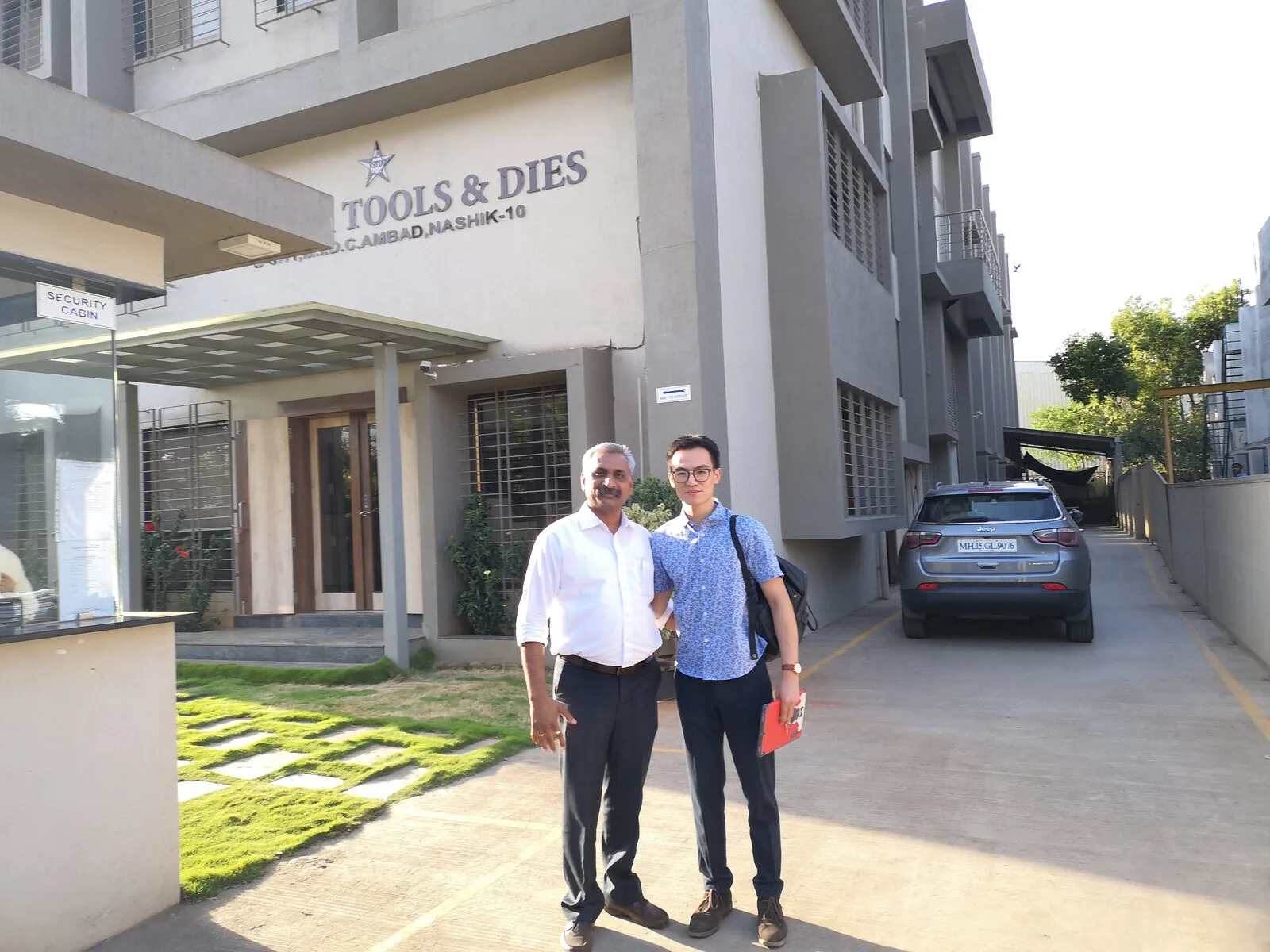
If the engagement is substantial enough to justify the travel cost, a properly run factory visit is the highest-confidence verification you can do. The walk through the floor, the conversation in the office, the lunch — all of it produces information you can’t get any other way.
This is also where I do the most of my work. The honest reason factory visits are valuable is not that I’m doing magic — it’s that being there, with someone who reads the room in the local language, surfaces things that would be invisible to a remote buyer.
What the framework doesn’t cover
The framework above gives you confidence that a factory is real and capable. It doesn’t tell you whether they will behave well over time — whether the second order matches the sample, whether they’ll communicate honestly when something goes wrong, whether the relationship deepens or decays.
That part takes either time, or someone local who’s done it before.
If you’re working through a sourcing decision and want a second pair of eyes on it, send me a note.